This formulation has gained a lot of attention, and it quickly became obvious that moralistic therapeutic deism was not just the belief of millennial teenagers but was characteristic of whole swaths of the Christian world.
The prevalence of this approach to Christianity represents a degenerate and weak state of Christianity that is highly vulnerable to the preaching of a more potent and virulent neo-Gnostic faith. Why is MTD so prone to embrace neo-Gnostic beliefs?

First, because of the highly fragile state of personal identity in the modern world, people face a heightened level of psychic suffering. The universal experience of alienation has been magnified and made more excruciating by modern social conditions. In such circumstances the therapeutic concern to feel good about oneself grains a great deal of potency.
Second, MTD orients its believers toward happiness in the present world. Nearly all of its attention is focused on a person’s experience in this current life, and such a way of thinking easily accommodates itself to a more potent neo-Gnostic faith. MTD doesn’t put God front and center in our daily lives, and so we can slowly remove him entirely and find ourselves to be adherents of the neo-Gnostic progressive religion.
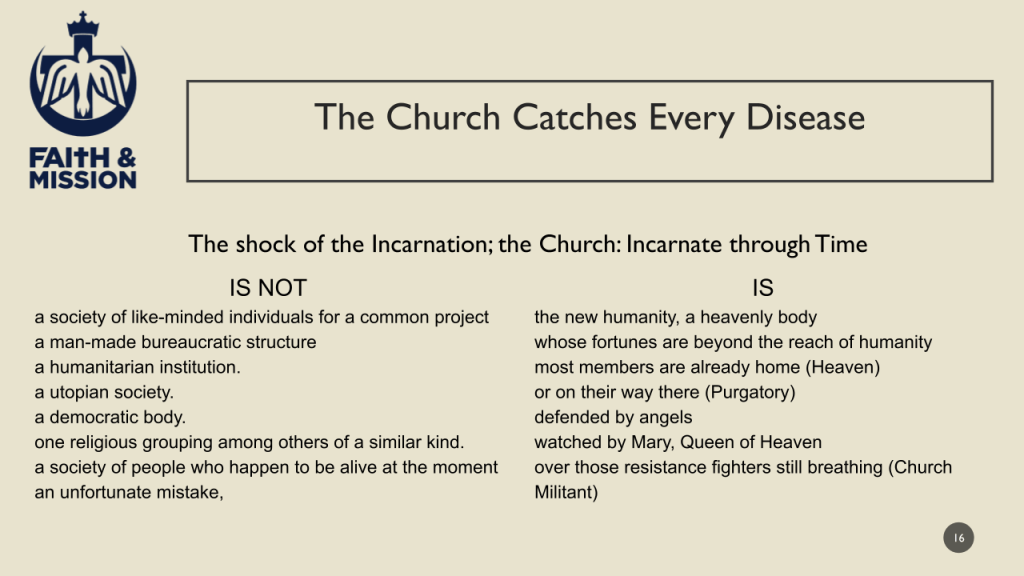
Jesus Christ established the Catholic Church, and the Holy Spirit defends it against the assaults of the devil. But the church is in this fallen world, and so it can catch the diseases that flowed through the world. After the second Vatican Council, Pope Paul VI who oversaw the Council made a poignant statement that somehow the smoke of Satan had entered the church.
There was certainly something of a revolutionary spirit among many of the participants in the Council and a confidence that they could refashion the expression of the church in such a way as to usher in a beautiful evangelistic time. The reality was that the Council closed as an extended period of confusion and darkness reigned around the world. And so the challenge for Christians and especially Catholics is to remember that despite the present darkness, the church will eventually come to its completion in Jesus Christ at the general judgment.
This can be a hard view to hold as with depressing regularity we see stories and examples of degradation within the church. If we slip into a false utopian neo-Gnostic train of thought, we might give into despair and conclude that there is something wrong with the Church. But that misses the point that the Church is by necessity at the center of human history. Furthermore, the battle to save humanity — the fight between Christ and the devil — is according to God’s divine plan to take place partly inside the church. The church is not a safe house or a panic room for Christians to hide out in before they go back out into the fight. They must be willing to fight within the church itself.

 Bound in Love
Leave a comment